If you have ever stood in a half-finished bathroom with a stack of tiles and no clear idea which adhesive to buy, you already know why Tile Chemical Dealers matter. The tile is the part everyone sees, but the thin layer of adhesive underneath and the narrow line of grout between the tiles decide whether a floor still looks good in year five or starts sounding hollow in year one.
In Indian conditions, where summers are punishing and monsoon humidity creeps into every wall, that hidden layer works harder than most people realise. This guide is written for homeowners, contractors and site supervisors who want a straight answer on what a good dealer sells, how to judge one, and which product suits which job. We have also listed the mistakes we see most often, so you can avoid paying for them twice.
What Do Tile Chemical Dealers Actually Sell?
Ask ten people what this trade involves and you will get ten different answers. In practice, Tile Chemical Dealers supply everything that goes between a tile and the surface it sits on, plus everything that fills the joints around it. A well-stocked counter usually covers the following:
- Cement-based tile adhesives for ordinary floor and wall tiles.
- Polymer-modified adhesives for vitrified tiles, large-format tiles and natural stone.
- Block jointing adhesives used to lay AAC and similar blocks with thin joints.
- Cement grout for everyday joint filling in dry areas.
- Epoxy grout for joints that face water, chemicals or heavy cleaning.
Some dealers keep all of this on the shelf. Others stock one or two items and push whatever they happen to have. That difference is the first thing worth noticing when you walk in.
Why Tile Fixing Chemicals Matter More Than the Tile Itself
People spend weeks choosing a tile and about five minutes choosing the adhesive. It should be the other way round, or at least closer to even. A premium vitrified tile laid with the wrong adhesive can lift at the edges, crack under a heavy footstep or develop hollow patches that only show up months later.
Most tile failures trace back to one of three causes: poor bonding, movement the adhesive could not absorb, or water getting under the tile through weak joints. Good tile fixing chemicals are built to handle all three. They grip the back of the tile, flex slightly with temperature changes, and keep moisture out. When you speak to experienced Tile Chemical Dealers, this is the logic they will walk you through before they mention a single brand.
Tile Adhesive vs Traditional Sand-Cement Mortar
Many sites in India still fix tiles with a thick bed of sand and cement. It works, and it is cheap on paper, but it has real drawbacks. The bed is uneven, the bond depends heavily on the mason's skill, and curing needs patience. Thick beds also add weight and take longer to set.
A modern tile adhesive is applied in a thin, even layer with a notched trowel. The polymers in the mix improve grip and flexibility, and the result is consistent from one corner of the room to the other. For large vitrified tiles, which are heavy and unforgiving, thin-bed fixing is now the normal approach rather than the premium one.
Quick tip: Always check the back of the tile. Tiles with deep ribs or a dusty surface need a different adhesive and sometimes a primer. A trustworthy dealer will ask you about the tile before recommending anything.
Why Contractors Ask Their Tile Chemical Dealers for Epoxy Grout
Grout is the part of the job most people treat as an afterthought, which is a pity, because the joints are where dirt, water and bacteria enter. Ordinary cement grout is porous. It stains, it darkens in wet areas, and over time it can crumble or grow mould along the lines.
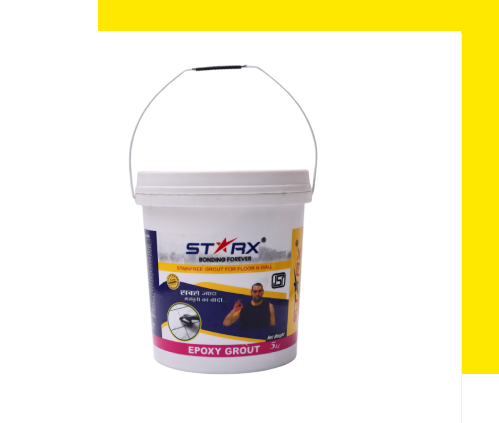
Epoxy grout is a resin-based alternative. It is hard, dense and resistant to water, which is why showers, kitchens, hospital floors and swimming pools are common places to see it used. When you ask reliable Tile Chemical Dealers for a long-lasting joint filler, this is usually what they point you towards.
Starx Epoxy Grout is a 100% solid, three-component product. It is premixed, stain free, anti-bacterial and anti-fungal, and it offers high chemical resistance along with good resistance to abrasion and impact. It comes in 1 Kg and 5 Kg packs at an indicative price of around ₹2,500 per pack, and there is also a sprinkling variant that gives a decorative effect across three finish groups. Final pricing depends on quantity and location, so it is worth asking for an exact quote. You can read the full details on the Starx Epoxy Grout product page.
Where epoxy grout makes the most sense
- Bathrooms and shower areas where water sits on the joints.
- Commercial and home kitchens that deal with oil, acids and frequent washing.
- Swimming pools and wet areas that stay damp for long periods.
- Hospitals, clinics and food areas where hygiene is a priority.
- High-traffic floors in offices, hotels and showrooms.
How to Choose a Reliable Tile Chemical Dealer
Price matters, but it is a poor first filter. A dealer who is ten per cent cheaper and gives you the wrong product costs you far more in the end. These are the checks that actually help.
1. Do they ask questions before they quote?
A good dealer asks what tile you are laying, where, on which surface, and how big the tile is. If the first thing you hear is a price, be cautious. Honest advice starts with the job, not the bag.
2. Is the stock fresh and properly stored?
Cement-based adhesives absorb moisture. Bags stacked on a damp floor or near an open drain lose strength long before the printed expiry date. Check the manufacturing date and look at how the material is kept.
3. Can they explain the difference between products?
Why does one adhesive suit large vitrified tiles while another is meant for small ceramic ones? If your dealer can explain that in plain words, you are in good hands. If the answer is vague, move on.
4. Do they deal with a known manufacturer?
Products from an established manufacturer come with consistent quality, technical data and someone to call if something goes wrong on site. Anonymous, unbranded material makes any complaint nearly impossible to resolve.
5. Will they support you after the sale?
Real projects throw up surprises: an uneven wall, a rain delay, a tile that behaves oddly. Dealers who pick up the phone and help you sort it out are worth far more than those who only deliver bags.
Common Mistakes People Make When Buying Tile Chemicals
- Using one adhesive for everything. Wall tiles, floor tiles and large stone slabs have different needs.
- Skipping surface preparation. Dust, oil and loose plaster ruin even the best adhesive. The surface must be clean, firm and free of standing water.
- Mixing by guesswork. Water ratios on the pack exist for a reason. Too much water weakens the bond.
- Choosing cement grout for wet areas. It looks fine on day one and starts to stain or crack within a season or two.
- Ignoring the open time. Spreading adhesive over a large area before placing tiles lets the surface skin over and weakens the bond.
- Buying only on price. A cheap pack that fails means removing tiles, which costs many times more than the savings.
Which Product Suits Which Job?
The table below is a simple starting point. Always confirm the exact product with the manufacturer's data sheet or your dealer before ordering, since tile type and site conditions change the answer.
| Job | Product type | Why |
|---|---|---|
| Standard floor tiles | Floor tile adhesive | Even, thin-bed bond with good grip. |
| Large vitrified or stone | Heavy-duty polymer adhesive | Handles weight and low water absorption. |
| Block masonry | Block jointing adhesive | Thin joints, faster work, cleaner walls. |
| Bathrooms and pools | Epoxy grout | Water resistant, stain free, hygienic. |
| Kitchens and labs | Epoxy grout | Stands up to chemicals and frequent cleaning. |
Why Buying Directly From a Manufacturer Makes Sense
Working with a manufacturer-backed supplier has practical benefits. Delivery is quicker, stock is fresher, and technical questions get answered by people who actually make the product. For contractors running tight schedules, that saves days.
Starx Product manufactures tile fixing adhesives and grouts under the Starx brand using modern technology. The range covers floor tile adhesives, the 515 and 525 series, block adhesive, the 535 adhesive and epoxy grout. If you are comparing Tile Chemical Dealers, ask each of them where their material is made, how it is stored, and who stands behind it.
Frequently Asked Questions
What should I ask Tile Chemical Dealers before buying?
Share your tile type, tile size, surface and location (wet or dry). Then ask which adhesive and grout they recommend, how much material you will need and what the manufacturing date is.
Is epoxy grout worth the extra cost?
For wet areas, kitchens and hygiene-sensitive spaces, yes. It resists stains, water and chemicals far better than cement grout, so joints stay cleaner for much longer.
Can I get small quantities for repair work?
Yes. Starx Epoxy Grout comes in 1 Kg packs, which suit small repairs, and 5 Kg packs for larger areas.
How do I get an exact price?
Prices depend on pack size, finish variant, quantity and delivery location. Call +91 93116 43257 or use the contact page for a quote.
Final Thoughts
Good tiling is mostly invisible. Nobody admires the adhesive or the grout line, and that is exactly the point: when the right materials are used, they simply do their job for years. Choosing the right Tile Chemical Dealers is the first step. Look for one who asks about your project, stocks properly stored material from a known maker, and explains their advice in plain language.
If you need help choosing between adhesives, or want to know whether epoxy grout is right for your bathroom, kitchen or pool, the Starx team is happy to guide you. Reach out for a quote and we will point you to the product that fits your job.