Walk through any construction site in Delhi NCR and you will notice one thing: the way walls are built is changing fast. Lightweight blocks are replacing red bricks, and the old habit of mixing sand and cement by hand is slowly giving way to ready-made products. If you are planning a house, a shop or a factory, choosing the right Adhesive Manufacturer in Delhi is one of those small decisions that quietly decides how your walls will look and hold up ten years from now. This guide explains what to look for, how block adhesive actually works, and the mistakes we see most often on site.
Why Block Adhesive Is Replacing Traditional Mortar
For decades, masons in India have laid bricks and blocks with a mix of cement and sand. It works, but it depends heavily on the person mixing it. One day the mix is a little rich, the next day it is too sandy, and the water content changes with the mood of the helper. The result is uneven joints, shrinkage cracks and walls that need extra plaster to hide the flaws.
Block adhesive solves this by moving the mixing from the site to the factory. Cement, polymers, natural minerals and graded aggregates are blended in fixed ratios, so every bag behaves the same way. On site you only add clean water, stir to a smooth paste and apply. That consistency is the real reason contractors are switching, and it is why a dependable Adhesive Manufacturer in Delhi matters more than most buyers realise at first.
What Exactly Is Block Adhesive?
Block adhesive is a premixed, cement-based bonding material made for fixing blocks, whether AAC, concrete or similar masonry units, to a floor or a vertical surface. Unlike ordinary mortar, it contains polymers that improve grip, flexibility and water retention. The thin, even bed it creates also means you use far less material than with a thick sand-cement joint.
A good product should give you high bond strength, no shrinkage and almost zero wastage. It should work indoors and outdoors, and it should not need any extra additives at the site. If a supplier asks you to add more cement or sand to a "premixed" bag, that is usually a sign that something is off.
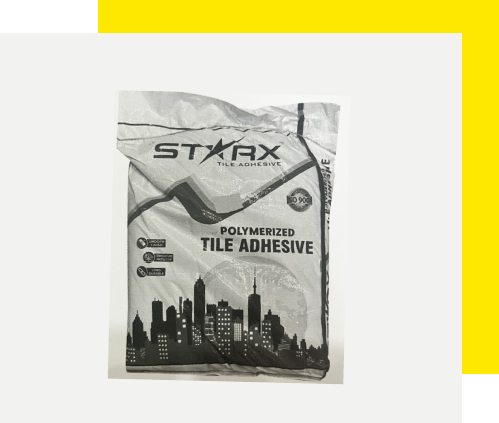 Starx Block Adhesive comes as a ready-to-use 20 kg premixed bag.
Block Adhesive vs Sand-Cement Mortar
Many homeowners ask whether the extra cost of an adhesive is really worth it. The honest answer is that the bag price is only part of the picture. Once you count labour time, wastage, plaster thickness and later repairs, the adhesive often works out cheaper. Here is how the two compare in practice.
- Bond strength: Polymer-modified adhesive grips the block face far better than plain mortar, which lowers the chance of debonding and hairline cracks.
- Joint thickness: Adhesive is laid in a thin bed, so you save material and get straighter, neater walls.
- Consistency: Factory mixing removes the guesswork. Hand-mixed mortar changes from batch to batch.
- Speed: Blocks can be placed faster and aligned more easily, which shortens the project timeline.
- Wastage: You mix only what you need, and there is no sand to haul, store or sieve.
None of this means traditional mortar is useless. For rough, low-cost work it still has its place. But for modern block masonry, especially AAC blocks, an adhesive is simply the better tool for the job.
What to Look for in an Adhesive Manufacturer in Delhi
Delhi has no shortage of suppliers, and from the outside many bags look alike. The difference shows up months later on the wall. When you shortlist an Adhesive Manufacturer in Delhi, check the following points before you place a bulk order.
1. Do they actually manufacture?
Traders and manufacturers are not the same. A real manufacturer controls the formula, the raw material quality and the packing. That means a complaint can be traced back to a batch and fixed, instead of being passed from one dealer to another.
2. Is the formula clearly explained?
Ask what goes into the bag. A reliable maker will tell you about the cement, polymers, minerals and aggregates, and will give you a clear coverage figure instead of a vague promise.
3. Is the coverage realistic?
Coverage numbers help you estimate quantity and budget. For example, a 20 kg bag of Starx Block Adhesive covers roughly 55 to 60 square feet when applied correctly. Be careful with claims that sound too good to be true, because thicker application on uneven surfaces will always reduce the area.
4. Can you reach them easily?
Site problems do not wait for office hours. A supplier based in Delhi can answer questions quickly, send technical guidance and deliver on time, which matters a lot when a crew is waiting on material.
5. Does the product suit your surface?
Check that the adhesive is compatible with the base you are working on, such as cement plaster, brick masonry, AAC blocks, concrete or a cement mortar bed.
Where Block Adhesive Can Be Used
One of the biggest advantages of a good block adhesive is its range. It is designed mainly for external floor work, yet it performs equally well on internal floors and vertical walls. That makes it useful across residential flats, independent houses, commercial shops, warehouses and industrial sheds.
It bonds well to cement plaster, brick masonry, AAC blocks, concrete and cement mortar beds. For ceramic tile or stone surfaces, the adhesive should be mixed with an SBR mortar admixture to get the extra grip those smooth, dense materials need. Skipping this step is a common reason for weak bonding on glazed surfaces.
How to Apply Block Adhesive Step by Step
Even the best product can fail if it is applied carelessly. The good news is that block adhesive does not need highly skilled labour. A trained mason with a trowel and a spirit level can get excellent results by following a simple routine.
- Prepare the surface. Remove dust, oil, loose particles and standing water. A clean base is the foundation of a strong bond.
- Mix with clean water. Add the powder to water, not the other way around, and stir to a smooth, lump-free paste. Let it rest for a couple of minutes, then stir once more.
- Spread an even bed. Apply the adhesive on the base or the block face with a notched trowel so the layer stays uniform.
- Place and press. Set each block firmly into the bed and check alignment with a spirit level before the adhesive starts to stiffen.
- Let it cure. Leave the work undisturbed so the adhesive can set without being shaken or loaded too early.
Mix only as much as you can use in the working time mentioned on the bag. Re-wetting or diluting a stiffened batch weakens the bond, and it is better to prepare a fresh small batch instead.
Common Mistakes Builders Make
After talking to contractors and site engineers over the years, a few mistakes keep coming up. The first is adding cement or sand to a premixed product, thinking it will make it stronger. It does the opposite, because it upsets the balance of polymers and aggregates. The second is applying the adhesive on a dusty or wet surface. The third is using too much water, which causes slumping and lowers strength. The last is rushing the work and loading the wall before it has set properly.
Avoiding these four things alone will improve the quality of your masonry more than switching brands ever could.
Why Builders Trust Starx Product
Starx Product is a fast-growing Indian company making construction chemicals from our unit in Mundka Industrial Area, Delhi. As an Adhesive Manufacturer in Delhi, we focus on a simple promise: a bag that behaves the same way every single time. Our Block Adhesive is built from cement, polymers, natural minerals and aggregates, and it gives high bond strength, no shrinkage and zero wastage. Because it is premixed, your team only adds water and starts work.
We supply builders, dealers and homeowners across India, and we are always happy to help you estimate quantity for your project. You can read the full technical details on our Block Adhesive product page, or look at the rest of our range on the products page.
Storage and Handling Tips
A little care after purchase protects your investment. Store bags on a raised platform, away from walls and moisture, and keep them covered. Use older stock first, and never open a bag until you are ready to mix. Damp or lumpy powder should not be used, because the cement has already started reacting with moisture. Proper storage costs nothing, yet it saves a lot of rework.
Final Thoughts
Good walls are not an accident. They come from the right blocks, careful labour and a reliable bonding material. Whether you are building a small home or managing a large project, take the time to choose a proper Adhesive Manufacturer in Delhi who is open about the formula, honest about coverage and easy to reach when you need help. A slightly higher planning effort today means fewer cracks, fewer repairs and a finish that you can be proud of for many years.
Need Block Adhesive for Your Project?
Talk to Starx Product for rates, bulk quantity and delivery details.
Enquiry Now +91 93116 43257